Thought Leadership
Pick your favorite metric. CPA, ROAS, CPM. Over the past five years, efficiency has declined 50%.
That's not a projection or a hot take. It's math that just about every CMO of every major consumer brand will relate to instantly.
The result? Enterprise brands are spending twice as much to acquire the same customer they got in 2020.
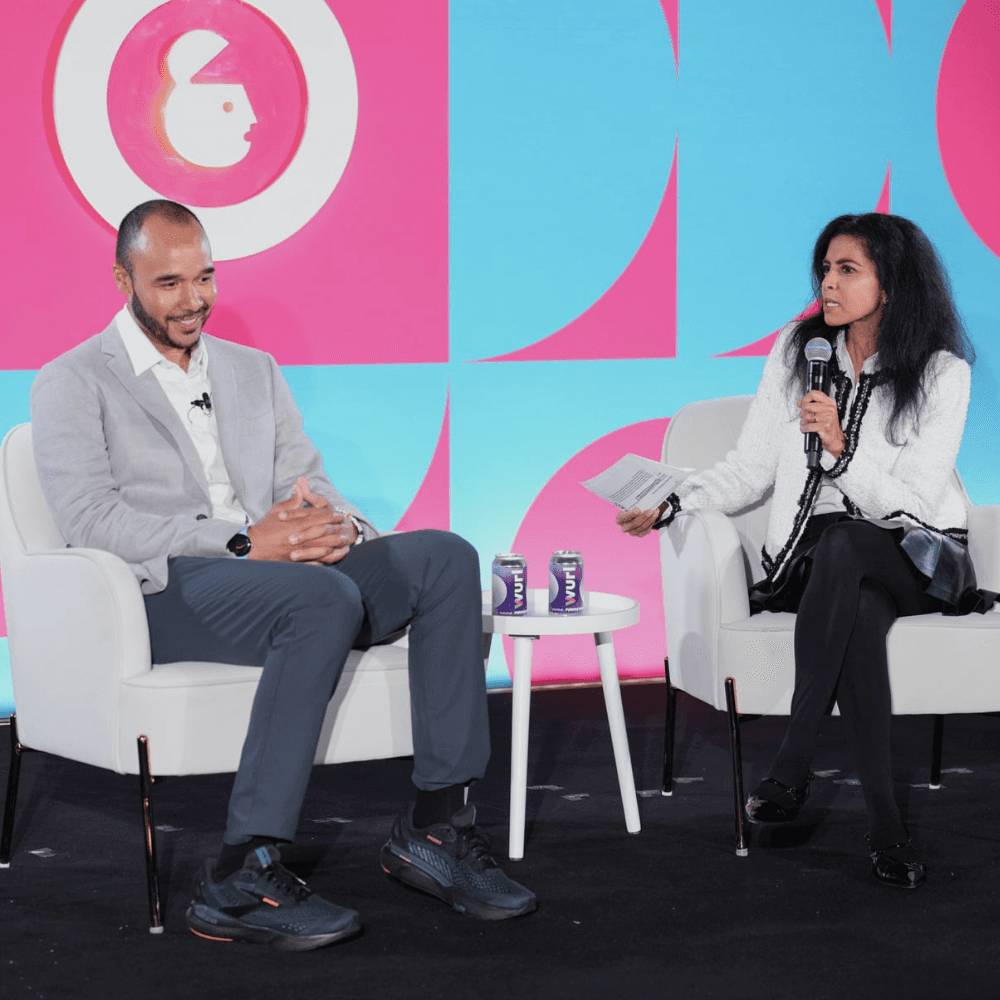
At Advertising Week New York last month, Adora CEO Marco Matos sat down with retail analyst and journalist Hitha Herzog to unpack why this is happening and what enterprise marketing teams can do about it.
Marco's perspective comes from nearly 20 years inside the machine. He built digital advertising products at Microsoft, Google, Meta, and Pinterest. He understands how these systems work because he helped build them. And he left to start Adora because he saw something that couldn't be unseen: brands are stuck in the mud while efficiency continues to decline.
The conversation covered everything from why the economics of advertising are more broken than ever to the explosion of AI-point solutions to what "speed of culture" actually means for enterprise brands.
Here are five insights that matter for marketing leaders trying to reverse the efficiency crisis brought about by the trillion dollar advertising industry.
1. Despite All the Data, The Economics of Advertising Are More Broken Than Ever Before
Given just how much data and how many tools we have at our disposal, why are advertisers seeing such a sustained decline in performance and returns?
While there are many explanations we could point to, one stands out: the competing priorities baked into advertising platforms algorithms and business models.
There’s no question that Meta, Google, TikTok and the like have built some of the world’s most sophisticated systems over the past 15 years. APIs, pixel technology, attribution models. All designed to give brands the ability to optimize and utilize their budgets. But imagine what happens within the ad auction when Meta or Google are balancing so many competing priorities?
As Marco explained, "They're balancing so many variables around user content, the ability to retain users, advertiser efficiency, revenue."
Your cost per acquisition? It's just one input among many competing interests.
The theory behind Adora was simple: What if we built technology that optimized for exactly one thing? Return on your investment as an advertiser.
That requires bringing the technology inside. Training AI on your specific brand, your product catalog, your customer data. Optimizing based on what you care about, not what the platform's business model requires.
Marco put it another way during his conversation with Herzog, calling out what's missing from advertising's most repeated formula.
"Everybody who's worked in advertising has heard the right message to the right person at the right time," Marco said. "That misses something completely obvious to me, which is at the right price."
That fourth variable isn't a nice-to-have. It's the difference between profitable growth and burning budget. The "right message to the right person at the right time" delivers zero value if the economics don't work.
2. AI Point Solutions Are Creating Marketing Frankenstacks, Not Fixes
You’d think the glut of marketing and advertising technology is making things better. But in many instances, it’s actually getting so much worse.
"The last few years have showed us, for those that know the LUMAscape, every year the LUMAscape gets more LUMAscape-y," Marco said at Advertising Week.
More boxes. More vendors. More specialized tools claiming to solve one specific piece of the marketing challenge.
The AI era has set this trend into hyperdrive. Suddenly, there was AI for creative generation. AI for audience targeting. AI for performance measurement. AI for content optimization. AI for orchestration. Each vendor wrapping technology around a specific function, with objects, metrics, and assets defined using their own unique language.
"Especially with AI, you see a lot more point solutions," Marco explained. "And that requires marketers to become Frankenstack builders."
That's not an exaggeration. It's the daily reality for marketing teams at enterprise brands.
You're stitching together tools that don't talk to each other. Managing vendor relationships across six or eight or ten categories. Explaining to your CFO why you need another platform when you already have 30. Building integration layers to connect systems that were never designed to work together.
Those hidden costs add up quickly and compound over time:
Integration overhead that pulls engineering resources away from strategic work
Data trapped in silos because systems can't share information
Workflow complexity that slows down campaign launches
Vendor management that consumes hours of leadership time
And somehow, in all that complexity, marketing teams are supposed to move with the speed of culture.
Enterprise marketers do need systems that take advantage of the AI era. But we don't need more specialized tools. We need systems where brand training, creative production, performance optimization, and measurement work together from the start. Where data flows between capabilities instead of getting stuck in vendor silos. Where the technology actually helps our teams move faster.
When you've got a performance marketing team trying to launch campaigns, a creative team producing assets, a marketing ops function managing tech stack, and external agency partners executing across channels, you need platforms that bring those workflows together.
Not another point solution to add to the stack.
3. Speed of Culture Means Being Ready When the Moment Matters, Not Chasing Every Trend
Here's a stat that should concern every CMO: 97% of Fortune 500 companies are losing the speed of culture battle.
Cultural moments move faster than enterprise transformation timelines. A trend starts on Monday, goes viral by Tuesday, and the world has moved on by Friday. Meanwhile, traditional marketing planning operates in quarters and campaigns that take months to execute.
But Marco reframed what "speed of culture" actually means during his Advertising Week conversation.
"It doesn't mean you need to be at every cultural moment. It doesn't mean you need to be in every conversation," he explained. "But it does mean you need to be able to respond when an opportunity comes up."
The distinction matters. This isn't about reactive marketing or jumping on every trending topic. It's about having the organizational capability to move quickly when the moment is right for your brand.
Marco shared a story that makes this concrete.
When Adora was still just an idea, Alaska Airlines came to the team with a challenge. Taylor Swift's Eras tour was creating massive travel demand. As a travel brand, Alaska saw an opportunity to capitalize on the moment based on where they were flying. They wanted to galvanize their audience around these destinations.
The Alaska team spent months thinking through the opportunity. They developed concepts. They explored ideas. They planned campaigns.
And the moment passed.
"Within a few days, I took this challenge and with an early prototype of Adora, we showed them what was possible," Marco recalled. "And immediately they're like, ‘We get it. We totally get it.’"
From months of planning to days of execution. That's the timeline shift enterprise brands need to compete in today's environment.
But speed without strategy creates different problems. Marco emphasized three principles that make speed of culture work:
Authenticity to your brand. You can't fake your brand voice or values just to participate in a moment. Alaska Airlines needed campaigns that felt authentic to who they are as a travel brand, not generic content that could be for anyone.
Methodical approach. This isn't about being reactive. It's about having the operational capability to execute quickly when you've identified the right opportunity.
Human-in-the-loop. Technology enables speed, but experienced marketers make the strategic calls. "It's really about placing this technology in the hands of innovative, experienced marketers who know how to tell human stories," Marco said. "They're looking for technology to scale their operations, scale their growth, more importantly, scale their revenue."
The Alaska Airlines example demonstrates what changes when you have the right infrastructure. Not months of planning followed by execution. Not hoping you predicted the market correctly three quarters ago. Instead, the ability to identify opportunities and respond while they're still relevant.
That's what speed of culture actually means.
4. Generic AI Creates Generic Creative. Brand-Specific Training Is the Answer.
Every CMO faces the same challenge: how do you maintain brand authenticity while scaling content production?
The AI era made this tension more acute. Generic AI tools can create content quickly. But as Marco put it: "We all have seen the AI slop and like weird, glossy feeling that looks like it could be for anybody."
You know it when you see it. The uncanny valley of AI-generated content that technically looks fine but doesn't sound like your brand. Images that could be from any company. Copy that reads like it came from a template. Creative that has all the elements but none of the voice.
This happens because most AI marketing tools are built for everybody. They're trained on massive datasets of generic content. When you use them, you get outputs that reflect that training: competent, professional, and completely undifferentiated.
"You need a system that allows you to articulate and visualize what that expression is," Marco explained during the session.
The alternative is brand-specific AI training.
"We've really focused on solving the problem for each unique customer," Marco said. "And that requires you to build an AI model that's built on your brand expression, your product catalog, your customer data, all around how you want to show up in an authentic way."
This matters particularly for enterprise brands. When you've spent years building brand equity, when you have specific positioning in market, when your customers recognize your voice, you can't afford to dilute that with generic AI outputs.
The technical difference is straightforward: instead of using AI trained on everything, you use AI trained specifically on your brand. Your photography style. Your tone of voice. Your product positioning. Your customer relationships.
But the strategic difference is profound.
Generic AI tools optimize for speed at the expense of brand. Brand-specific AI maintains your voice while enabling scale. One creates content that could be from anyone. The other creates content that could only be from you.
Marco also pointed out that most AI startups are building for SMBs and mid-market.
"It's a daunting task to work with large enterprises," he acknowledged. "But when you've unlocked the ability for performance, creative, operations to all work together, they move so much faster, and the results speak for themselves."
That's the other piece enterprise brands can't ignore. You don't just need creative at scale. You need creative, performance marketing, and operational workflows working together. Brand-specific training is table stakes. But the real value comes when that training connects across your entire marketing operation.
When your creative team can produce assets that your performance team can immediately test and optimize. When insights from campaign performance feed back into creative iteration. When everyone is working from the same brand foundation instead of generic templates.
That's how you maintain brand authenticity at enterprise scale.
5. From 90-Day QBRs to Real-Time Response: Performance Marketing's New Timeline
Traditional performance marketing operated on a simple but slow cycle.
You spend weeks or months planning a campaign. You perfect your strategy. You develop your creative. You launch. Then you wait.
Wait for data to accumulate. Wait for statistical significance. Wait for your quarterly business review where you finally learn what worked and what didn't. Ninety days later, you have insights. By then, the market has moved on.
Marco used Brooks Running as an example of what changes when you can respond in real time.
Brooks spends significant time perfecting their campaign strategy and figuring out how to position their shoes. But they don't really know which products will resonate or which colorways will become popular until after launch.
"At that moment when they launch, they're just waiting," Marco explained. "And historically, you're like, okay, cool. I'll wait for my QBR, and you'll tell me in 90 days what actually worked or what didn't."
With real-time performance data and the ability to generate creative variations quickly, Brooks can respond immediately instead of waiting three months.
"Those lime greens are really hot right now," Marco said, referencing a specific example. "Well, we've got to bring those in 10 different variations and move much, much faster, and we're going to shift budgets, because that's moving right now."
That's the timeline shift: from 90-day learning cycles to immediate response.
When a colorway starts trending, create 10 variations and test them today. When performance data shows what's working, shift budgets now, not next quarter. When market signals indicate opportunity, respond while it's still relevant.
"The ability to respond in real time to results and optimize how you move creative is part of that," Marco said.
This changes the game for performance marketing teams. Instead of hoping your pre-launch planning was correct, you can respond to actual market signals. Instead of waiting for enough data to make decisions, you can iterate continuously. Instead of quarterly course corrections, you can optimize daily.
The operational efficiency compounds over time. Your creative team isn't redoing photoshoots for every variation. Your media team isn't locked into budgets allocated three months ago. Your marketing ops isn't waiting for systems to sync before making changes.
Brooks Running demonstrates what enterprise performance marketing looks like when you remove the 90-day lag between launch and learning. It's not about replacing strategy with speed. It's about enabling your strategy to adapt as the market responds.
That's the new standard for performance marketing at scale.
A Pragmatic Framework for Turning AI into an Efficiency Solution, Not an Operational Problem
The reality for marketing leaders is straightforward: AI marketing tools are proliferating faster than anyone can evaluate them. Every vendor claims their solution will transform your operations. Most won't.
During his conversation with Herzog, Marco acknowledged this challenge and offered a practical framework for cutting through the noise.
"Most people who are here already bought into the AI disruption," he said. "The real question is making sense of what's real and what's not."
His recommendation comes in three steps:
First, test. Pilot as many tools as you can to figure out what's best in class for your organization. Marco was direct about this: "I'm biased. I think we have a great solution, but I would encourage everybody to play around with all the tools that exist, because you learn a ton."
Second, focus on the problem you're trying to solve. There are hundreds of AI marketing tools available. Most of them might not be relevant to your organization's actual challenges. "Are we trying to lower our CPA? Are we trying to scale our business? Are we trying to scale our business and not scale our workforce?" Marco asked. "Figure out the problem you want to go solve."
Third, set clear goals before you test. "It becomes very easy to test a bunch of stuff, and then you're like, now, what do we do?" Marco explained. "When you start your test, have a plan, be methodical about it, and then put the money behind and put into action."
The brands winning right now aren't the ones with the most AI tools. They're the ones who identified specific problems, tested methodically, and committed to solutions that actually move their business forward.
Watch the full conversation between Marco Matos and Hitha Herzog from Advertising Week New York: