Customer Stories
Every enterprise marketing leader is drowning in the same problem: too many AI vendors, too many promises, and no clear framework for separating real transformation from expensive distractions.
Your inbox is full of vendors promising to transform your marketing. Every conference, every board meeting, someone's asking you to evaluate another tool you supposedly can't live without.
But few vendor pitch decks address what actually matters: the gap between impressive demos and operational reality. Between what's possible with clean data versus what's achievable with your organization's constraints.
Mike Shiwdin understands that gap better than most marketing leaders.
As the Group Vice President of Loyalty, Guest Engagement, and Strategic Partnerships for Wyndham Hotels and Resorts, he operates at the intersection of marketing and finance, leading digital transformation for Wyndham Rewards, a program spanning 120 million members, 8,900 hotels, and 25 brands worldwide.
But Mike began his career as a financial analyst on Wall Street. This banker's discipline now shapes how he evaluates marketing technology to determine what will actually deliver value at enterprise scale.
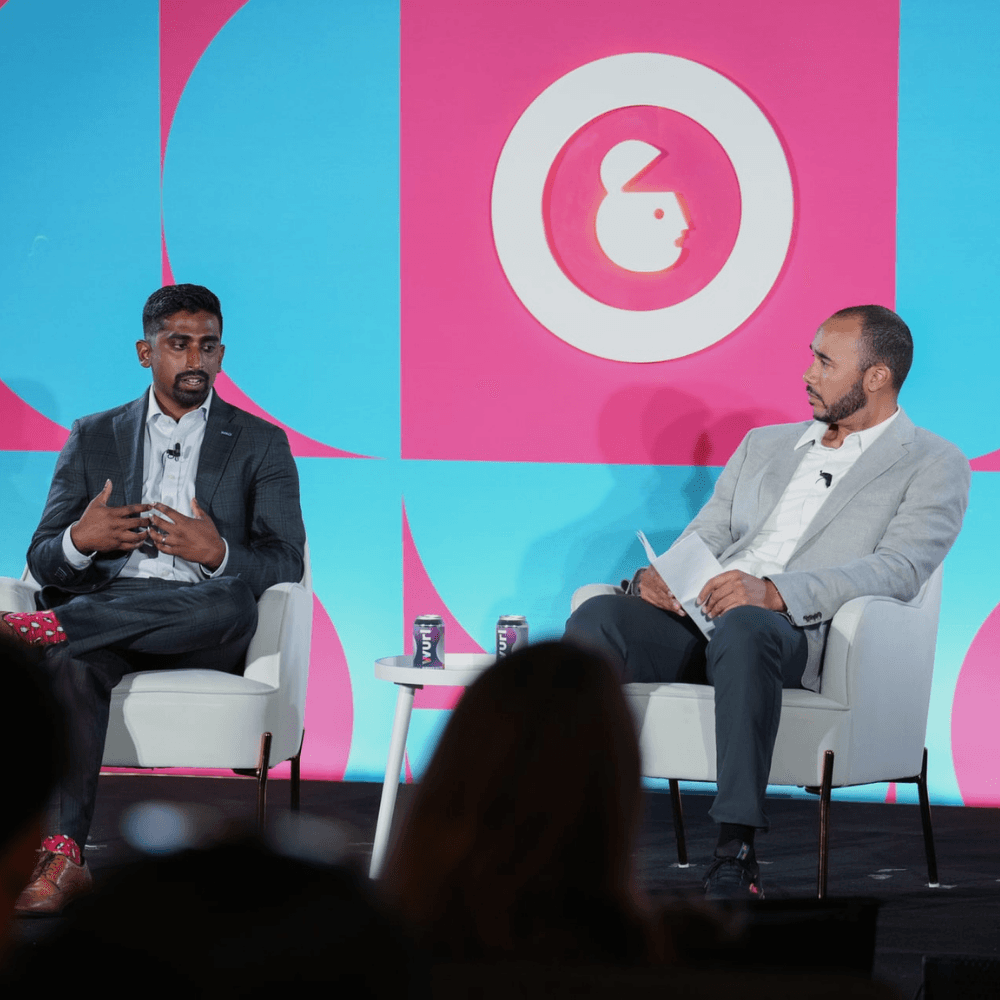
That combination is exactly why our CEO Marco Matos sat down with Mike at Advertising Week New York. Their conversation covered how he evaluates new technologies, makes the internal case for large investments, and the execution realities that make or break implementations.
The Banker’s Lens: Why Most Marketing Investments Fail
What does a banker's discipline look like when evaluating marketing technology?
It starts with a principle Mike learned early: you can't evaluate a solution until you've clearly defined the problem.
"The core piece for us is really starting with a problem set," Mike said. At Wyndham's scale (25 brands, hundreds of audiences, billions in revenue optimization), vague promises of "transformation" don't cut it.
Once the problem fit is clear, three questions determine whether a solution is worth pursuing.
First: Does this solution align with our brand values?
"Everything has to go back to your brand values," Mike explained. "If it aligns with your brand values, your brand ethos, then ultimately that is your safe space, because even if you failed forward in a particular use case, you're still making the progress of ensuring that your brand is resonating with your guests."
That creates boundaries for experimentation. Within those boundaries, you can move fast. Outside of them, you're risking what makes your brand valuable.
Second: Does this solution fit into a three-year roadmap?
Wyndham has a rolling three-year plan. Any new investment has to tie into years three or four of their corporate goals.
"If it doesn't tie into that third or fourth year, then you shouldn't be looking into that niche product," Mike said, noting how easy it is to chase the next shiny object.
Every AI vendor wants you to believe their solution is urgent. This framework forces you to ask: is this urgent for us, given where we're trying to be in three years?
Third: Will this technology partner remain nimble as we mature?
"Partners that we look to slowly roll off our tech stack are those that aren't keeping up with consumer expectations and the interoperability across your martech," Mike explained. "Some enterprise platforms really only work well within their sandbox."
When you’re managing 25+ brands with hundreds of distinct audiences, you can't afford partners who trap you in their ecosystem.
The question isn't just "Can this tool solve our problem today?" It's "Will this partner grow with us, or will we outgrow them in 18 months and face a painful migration?"
That's the banker's lens: look past the pitch deck and model what happens when reality gets complicated.
Speaking the Language of Your CFO: How to Pitch AI Investments That Actually Get Funded
Mike's evaluation framework helps him decide what to pursue. But even the right investment dies without executive buy-in.
Most CMOs pitch marketing technology like campaigns: "This will deliver X ROAS on our next promotion."
But your CFO isn't thinking in campaign ROAS. They're thinking in time-series cash flows, internal rate of return, and net present value.
So that's how Mike pitches martech investments.
"What I found success with is looking at the investment as a time series of your strategic initiatives, as opposed to just looking at ROAS," Mike said. "At the end of the day, our goal is, 'How do I make sure my brand is showing up consistently?' And so that's a series of planned campaigns over the next 12 to 18 to 24 months."
A martech platform impacts multiple campaigns over years. It changes how your team works. It compounds learning over time.
Here's where Mike gets specific: "You start to switch it into a more financial oriented conversation, where ROAS is really your top line, but you really should be looking at IRR, which factors in your expense, your time series, your cash flow time series, and then from an NPV perspective."
IRR (internal rate of return) accounts for when you spend money and when you realize returns. NPV (net present value) factors in the time value of money and risk.
"That then makes a conversation really easy with a CFO to say, 'Hey, over the next two years, my next tranche of brand marketing efforts is going to drive Y in terms of enterprise value opportunity for our stock price as a public company.'"
You're no longer asking for a marketing budget. You're proposing an investment that contributes to shareholder value.
The Human Dimension: What Every Technology Implementation Guide Misses
You've selected the right partner. You've made the case. Your CFO approved the investment.
Now comes the part where most transformations fail: implementation.
Most enterprise martech implementation plans focus on integration timelines and training schedules. Few account for the messier reality: your team needs to fail, learn, adjust, and build confidence.
"Technology is an upfront investment," Mike said. "Without people and process, none of the value realization actually comes to life. You can't force that to a team. They have to learn the value of that over time."
Mike's team launched an optimization engine in Q1. In the first few weeks, it lost revenue.
Many organizations would have panicked. Killed the project. Blamed the vendor.
Mike's team kept going. They implemented it in bite-sized pieces where losses weren't detrimental and recouped losses through other touchpoints. They gave themselves space to learn and adjust.
"Now we're trending at an 18+ percent improvement."
Building Change Champions, Not Just Implementing Tools
That journey required months of patience. Not every initiative can afford delayed time-to-value. But even in this AI era, not every initiative worth doing is suited to immediate returns. The key is building a program robust enough to let your team place strategic long-term bets without sacrificing this quarter's critical KPIs.
Here's what Mike understands that most implementation plans miss: the goal isn't just getting key players ramped today. It's building organizational muscles that persist, even when your initial champions move on.
"In the next six months, whether I'm there or one of my direct reports is, that technology is now going to be a core ethos of our corporate culture, and that's ultimately what's going to drive long-tail value for our stockholders."
You can't force your team to become champions of change. You have to give them space to learn, struggle through, and figure it out.
"Our focus is, how do we ensure that there's a reasonable ramp for us to make mistakes?"
That's the opposite of transformation initiatives that demand immediate results and get squashed when they fail to achieve them.
Breaking Down the Garden Wall
When Marco asked Mike about the future of advertising in the AI era, his answer was clear: the fundamental shift is about closing the loop between paid media and first-party data.
Mike calls it "the garden wall": the structural barrier between paid media (generally managed by an agency) and your first-party data.
"There's always a garden wall, historically speaking, at least with our agencies and our internal first party data. How do we find breakthroughs through that garden wall?"
You're learning from each paid media engagement which creative resonates, which audiences respond, and which value propositions drive clicks. But you're not applying those insights to what happens next.
Use paid media signals to immediately personalize the experience. If a guest clicks on creative advertising a resort in Hawaii, that's a signal of intent. Mike's team uses it to show them the properties they're most likely to book.
"That paid media campaign, that's your first touch point, and so you should be learning from that. How do we curate and show your top 10% of properties that you have a likelihood of booking based on your lookalike model, your historical behaviors, your digital footprint?"
This creates a two-way flow where learning compounds instead of being siloed. Paid media signals inform the digital experience, and the digital experience informs their paid media targeting.
The AI Effect: 70x Testing Velocity
Wyndham sends over a billion emails annually. Two years ago, they ran five A/B tests at a time. Their last quarterly promotion ran 350 different combinations, optimized over two weeks.
What changed? The testing scale that AI decision engines and generative capabilities unlock.
"We leverage decision engines and generative AI copy placements," Mike explained. These tools allowed them to "push the boundaries of what we historically were comfortable with and test quickly and fail forward."
The results: double-digit engagement lift in click-through rates. Twenty percent improvement in conversion through personalization.
That's 70x the learning velocity. Every test informs the next test. Every insight suggests three more hypotheses worth testing.
AI isn't a magic bullet. Without the right structure, you'll create infinite creative headaches and thousands of unused assets.
But when you've done the work upfront, AI gives your team the ability to run at a scale that just wasn't possible until today.
Marketing to Outcomes, Not Transactions
"I think in three years, the way we go to market is going to be very different," Mike said.
"Today, at least hospitality, a lot of our focus is on driving the next stay. I think we're losing the real opportunity, though. People don't travel to stay at hotels. They travel for experiences. How do we start to evolve our marketing strategy to focus on the experience?"
Replace "travel" and "hotels" with your category, and the insight holds. Your customers aren't buying your product. They're trying to accomplish something.
"Consumer expectations from their loyal brands have completely evolved. It's no longer about your four walls of your business model. It's really about, how does it drive everyday value?"
Mike's team has been building partnerships to stay relevant to members 365 days a year, not just when someone books a hotel.
That's the opportunity every consumer brand faces. We've always known our offerings are a means to our customers' end. For the first time, we have the data to understand what that end looks like on an individual basis and the creative scale to speak directly to it.
The New Marketing Operating System, Built on Discipline
Mike's insights aren't unique to hospitality. They're the operating system for enterprise marketing in the AI era.
The common thread is discipline in a moment of overwhelming choice.
Here's what that discipline looks like in practice:
Financial discipline: Speak the language of your CFO. Think beyond ROAS. Manage your martech stack like a portfolio.
Strategic discipline: Commit to three-year roadmaps. Resist shiny objects. Anchor decisions in brand values.
Vision discipline: Market to outcomes, not transactions. Close the loop between paid media and first-party data.
Portfolio discipline: Continuously evaluate the bottom 10-20% of your stack. Choose partners who remain nimble as you mature.
Cultural discipline: Give teams space to fail forward. Build change champions willing to confront the status quo.
"I think it's just not getting complacent," Mike said. "Sometimes something works, so we lean into it, and then we put blinders on. With AI, consumer behavior is going to change. It's going to evolve quicker than ever. Martech is evolving. I feel like we're on a new page every six months now."
You need change champions who question the status quo and stay curious about what's next even when current performance is strong.
The uncomfortable truth? Consumer behavior will continue to evolve faster than most enterprises can move. No amount of AI tooling will help you keep up unless you have the discipline to design a culture where strategic transformation is happening everywhere, all the time.
You don't have to be a banker to lead through the noise.
But it certainly doesn't hurt.
Watch our full conversation from Advertising Week New York: