Thought Leadership
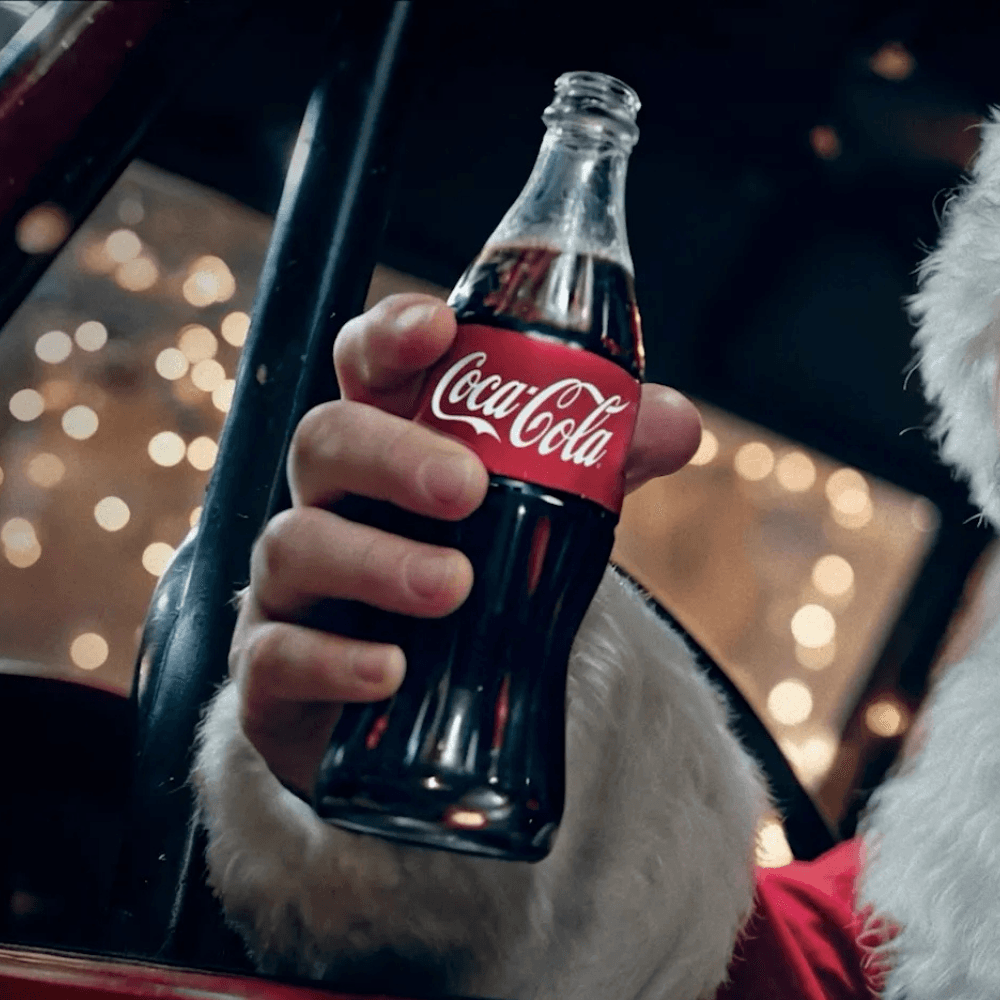
This season, Coca-Cola doubled down on AI-generated holiday advertising, and social media erupted. Again.
Critics called the ad soulless. Industry commentators questioned their judgment. The backlash has been swift, vocal, and entirely predictable. Yet Coca-Cola's Head of AI made their position crystal clear: the genie is out of the bottle, and they're not putting it back in.
While industry insiders debate creative merits, Coca-Cola just demonstrated what leadership looks like when you have conviction in a strategic direction. And whether or not you agree with their specific creative choices, they’re responding to a question every CMO needs to answer in 2026:
How do you test boldly with AI without betting your brand?
The Real Story Isn't About Creative Quality
Let's be direct about something: social media outrage doesn't equal market failure. It equals visibility.
When you're Coca-Cola, getting millions of people talking about your holiday campaign during the most competitive advertising season of the year is exactly the point. The uncomfortable truth for marketers who are playing it safe with AI? The brands that will define the next era won't be the ones avoiding controversy. They'll be the ones with enough conviction to push forward on strategic initiatives even when facing resistance.
Coca-Cola isn't just generating AI content and hoping for the best. They're developing in the open, learning publicly, and iterating based on real market response rather than pre-launch focus groups. They released an updated version with refined execution, and zero retreat from their strategy.
That's not recklessness. That's strategic learning at massive scale.
What Critics Get Wrong About AI Marketing Innovation
The loudest voices in the Coca-Cola debate are asking the wrong question. They're focused on whether this specific ad creative meets some subjective quality bar. Meanwhile, Coca-Cola is solving a different problem entirely: how to move at the speed of culture when traditional creative processes take months.
Coca-Cola has been a holiday marketing innovator for decades. From the polar bears in the early 90s to today, they've owned this cultural moment because they understand that leadership means making strategic bets and standing behind them.
Think about what actually happened here. Coca-Cola saw an opportunity to refresh a classic holiday moment, executed it with AI-generated content, launched it, gathered real market data, iterated the creative, and launched again, all within a competitive holiday window. Traditional creative processes couldn't come close to that velocity.
Is the execution perfect? That’s subjective. But did it drive conversation? Reinforce brand presence? Own a cultural moment? In short, do exactly what a holiday advertising campaign is designed to do? Absolutely.
The Framework Every CMO Needs: Test Boldly Without Betting the Brand
The real lesson from Coca-Cola isn't about whether AI-generated creative is "good enough" yet. It's about how enterprise brands can develop AI capabilities while managing risk. Most CMOs are paralyzed between two bad options: move too slowly and fall behind competitors, or move too fast and damage brand equity.
There's a better path. Here's the framework that enterprise performance marketing leaders are using to innovate with AI while maintaining brand control:
Start with controlled pilots. You don't have to bet your flagship holiday campaign on untested AI capabilities. Start with secondary channels, limited geography, or specific audience segments where you can learn without risking core brand equity. The goal isn't perfection; it's learning what works for your specific brand with your specific audiences.
Measure consumer response, not just social sentiment. Twitter outrage and TikTok mockery generate headlines, but they don't predict market performance. What matters is what your target customers actually do. Are they engaging? Are they purchasing? Are they remembering your brand when it matters? Coca-Cola understands this. They're optimizing for market outcomes, not social media approval.
Iterate quickly based on data, not fear. The brands that figure out how to learn fast in public will own the next decade of marketing. That means having systems in place to gather performance data quickly, make decisions based on evidence rather than opinions, and deploy improvements at market speed.
The Capability Gap Most Brands Are Missing
Here's what separates successful AI marketing implementation from public failures: it's not about having access to better AI models. Every brand can use the same generative AI tools. The difference is in three critical capabilities:
1) Brand-specific training: Generic AI models trained on internet data will give you generic internet output. The brands winning with AI are training models on their specific brand guidelines, product catalog, historical campaigns, and performance data. That's what enables authentic creative that feels distinctly yours rather than generic AI slop.
2) Human-in-the-loop workflows: The biggest risk in AI-generated advertising isn't that the creative will be mediocre. It's that something off-brand will slip through and damage your reputation. Enterprise brands need approval workflows, stakeholder collaboration, and quality control built into the process. AI should be a force multiplier for your team, not a replacement that eliminates oversight.
3) Performance feedback loops: Creating AI content is the easy part. Connecting that content back to actual performance data so your AI systems learn what drives results for your specific audiences: that's where most brands fall short. Without this loop, you're just generating more content without getting smarter about what works.
What This Means for Your 2026 Marketing Strategy
The question facing CMOs isn't whether to innovate with AI. That ship has sailed. The question is how to build these capabilities while managing risk appropriately for your organization's situation.
If you're Coca-Cola with decades of brand equity and global recognition, you actually can afford to test publicly and weather social media criticism. Your brand strength provides a buffer that lets you learn in the open (see New Coke).
Sure, if you're building brand awareness or operating in a more conservative category, your risk tolerance is going to be different. But the mistake is thinking you have to choose between leading aggressively, like Coca-Cola, and doing nothing. There are so many winning paths through the middle that allow you to test AI-generated creative, first in small experiments, then at scale, while maintaining control every step of the way.
From our experience working with Fortune 500 brands, AI advertising has been an enabler of human-powered creativity, providing brand creative teams with volume-based insights that help them understand what’s performing, what isn’t, and where to focus their time next.
The Brands That Win the Next Decade
Coca-Cola's holiday AI campaign (controversial as it may be) demonstrates something crucial about marketing leadership heading into 2026. The brands that will own the next decade will be the ones that figure out how to:
Launch campaigns in days instead of months, without sacrificing quality
Test enough creative variations to actually learn what drives performance
Maintain enterprise approval workflows while moving at market speed
Use AI as a capability multiplier rather than a cost-cutting replacement
I promise you, your competitors are building these capabilities as we speak. The AI genie is out of the bottle. It’s time to make certain you're building the capabilities to use it strategically, authentically, and at the scale your business requires.